

In the competitive landscape of online casinos, secure and reliable access to your account is the foundational layer of your gaming experience. This exhaustive whitepaper delves into the technical intricacies of the Mystake login system, encompassing the web portal and the dedicated Mystake app. Beyond simple steps, we analyze the underlying security architecture, provide mathematical models for risk assessment, and offer professional troubleshooting for common access issues. Whether you are a new user configuring your first login or a seasoned player fortifying your account, this guide serves as the definitive manual for navigating Mystake’s authentication protocols.
Before You Start: Essential Pre-Login Checklist
- Verify Jurisdiction: Confirm that Mystake operates legally in your region. Access may be geo-blocked.
- Gather Credentials: Have your registered email and password ready. For app users, ensure your device meets OS requirements.
- Check Connection: Use a stable, private internet connection. Public Wi-Fi can trigger security flags.
- Update Software: For the Mystake app, download only from official stores (Google Play or Apple App Store). On browsers, ensure Chrome/Firefox/Safari are updated.
- Prepare Documentation: Have ID (passport, driver’s license) handy for potential verification steps linked to login or withdrawal processes.
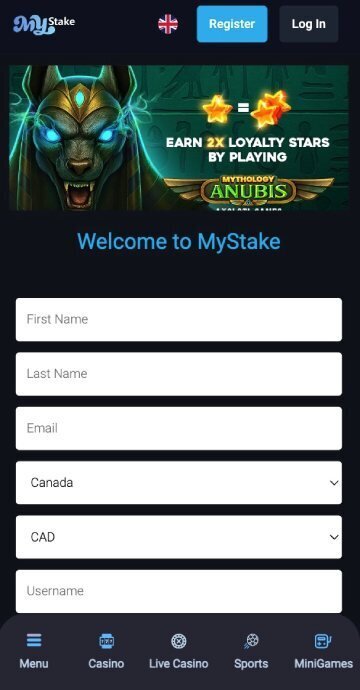
Registration & Primary Access Pathways
Gaining entry to Mystake begins with account creation. The process is designed for efficiency but incorporates critical security checks.
- Account Creation: Navigate to the Mystake site, click ‘Sign Up’, and provide a valid email, a strong password (meeting complexity rules), and personal details. Agree to terms and confirm via the email verification link.
- Web Login Protocol: Visit the login page, enter your email and password. The system may present a CAPTCHA after failed attempts. Successful authentication redirects you to the lobby.
- Mystake App Authentication: After installing the Mystake app, launch it. The login credentials are identical to the web version. The app often supports biometric login (Touch ID, Face ID) post-initial setup, offering a faster, token-based access method.
- Social & Wallet Logins: Mystake may offer alternative login methods via social media accounts or e-wallets. These use OAuth protocols, delegating authentication to third-party providers.
Mathematical Foundations of Login Security
Understanding the mathematics behind login security empowers users to create robust credentials. Let’s analyze password entropy and attack resilience.
Password Entropy Calculation: Entropy (H) measures password unpredictability in bits. Formula: H = L * log₂(N), where L is length and N is size of the character set. Mystake requires a minimum of 8 characters from sets: uppercase (26), lowercase (26), numbers (10). Thus, N = 62.
- Example 1 (Minimum): An 8-character password using all sets: H = 8 * log₂(62) ≈ 8 * 5.954 ≈ 47.6 bits. The total possible combinations: 62⁸ ≈ 2.18 x 10¹⁴.
- Example 2 (Recommended): A 12-character password: H = 12 * 5.954 ≈ 71.4 bits. Combinations: 62¹² ≈ 3.22 x 10²¹.
Brute-Force Time Estimation: Assuming an attacker can try 1 billion (10⁹) guesses per second. For the 8-character password: Time = (2.18 x 10¹⁴) / (10⁹) = 2.18 x 10⁵ seconds ≈ 2.5 days. However, Mystake’s account lockout (e.g., 5 attempts then 30-minute lock) alters this. The effective time with lockout becomes: (5 attempts / 30 min) = 0.167 attempts/min. To guess 2.18 x 10¹⁴ combinations: Time ≈ 2.18 x 10¹⁴ / 0.167 ≈ 1.31 x 10¹⁵ minutes ≈ 2.5 million years. This demonstrates how policy multiplies security.
Technical Specifications Table
| Feature | Specification | Operational Notes |
|---|---|---|
| Supported Web Browsers | Chrome 90+, Firefox 88+, Safari 14+, Edge 90+ | JavaScript and cookies must be enabled. |
| Mystake App Platforms | iOS 14.0 & later, Android 8.0 (Oreo) & later | App size: ~85 MB. Requires periodic updates. |
| Login Session Timeout | 15 minutes of inactivity (web), 30 minutes (app) | Auto-logout to prevent session hijacking. |
| Password Policy | Minimum 8 characters, 1 uppercase, 1 lowercase, 1 number | Special characters (@, #, $) are allowed but not required. |
| Two-Factor Authentication (2FA) | Optional via email or authenticator app (TOTP) | When enabled, login requires password + 6-digit code. |
| Failed Attempt Lockout | 5 consecutive failures triggers a 30-minute account lock | Lock resets automatically; support can manual override. |
| Data Encryption | TLS 1.3 for in-transit data; hashing (bcrypt) for passwords at rest | Ensures credentials are not stored in plain text. |
Banking Integration and Login Verification
Login integrity is directly tied to financial operations. Withdrawal requests often trigger a re-verification of your login identity to prevent fraud.
- Payment Method Linkage: Adding a deposit method (card, e-wallet) may require you to re-enter your login password for security confirmation.
- Withdrawal Authentication: For first-time withdrawals or large sums, the system may force a fresh login or 2FA check, even if you have an active session. This is a mandatory security step.
- Address Verification (Proof of Address): A document upload may be required. This process is initiated from your account settings but is a precondition for seamless login-to-cashout workflows.
Security Protocols and Best Practices
Proactive security transcends the basic login act. Implement these protocols:
- Enable 2FA: Use an authenticator app like Google Authenticator. This adds a time-based one-time password (TOTP), making credential theft insufficient for access.
- Unique Password: Never reuse your Mystake password elsewhere. Use a password manager to generate and store a complex, 12+ character password.
- Monitor Session Activity: Regularly check ‘Login History’ in your account settings for unrecognized devices or locations.
- App-Specific Security: On your phone, use a lock screen and ensure the Mystake app is not installed on rooted (Android) or jailbroken (iOS) devices, as this voids security.
Troubleshooting Common Login Issues: Scenario-Based Solutions
Scenario 1: «Invalid Password» Error Despite Correct Entry.
Possible Causes: Caps Lock enabled; password manager corruption; account compromised.
Resolution: Manually type password, ensure correct case. Use ‘Forgot Password’ to reset. If persistent, contact support and request a security audit.
Scenario 2: Mystake App Crashes on Launch.
Causes: Outdated app version; incompatible device OS; cache corruption.
Resolution: Update the Mystake app via official store. Clear app cache (Android: Settings > Apps > Mystake > Storage > Clear Cache; iOS: Reinstall). Restart device.
Scenario 3: Account Locked After Multiple Failed Attempts.
Cause: Security lockout protocol triggered.
Resolution: Wait 30 minutes for automatic unlock. Do not attempt further logins during this period. If urgent, contact customer support with verification documents to expedite unlock.
Scenario 4: Login Page Not Loading (Browser).
Causes: ISP blocking; DNS issues; browser extension conflict.
Resolution: Try using mobile data or a VPN. Flush DNS cache. Disable ad-blockers or security extensions temporarily. Access via direct IP if provided by support.
Extended Frequently Asked Questions (FAQ)
Q1: Can I use the same login for the Mystake website and the Mystake app?
A: Yes, credentials are unified. One account works across web and app platforms.
Q2: I forgot my password. How do I recover my account?
A: Click ‘Forgot Password’ on the login page. Enter your registered email. You’ll receive a reset link with a short expiry time (typically 1 hour). Create a new password following the same rules.
Q3: Why is the Mystake app not available in my country’s app store?
A: This is due to regional licensing restrictions. You may need to access via the mobile-optimized website instead, which offers similar functionality.
Q4: How do I enable two-factor authentication (2FA) for my login?
A: Log in, go to ‘Account Settings’ or ‘Security’. Find the 2FA option, choose ‘Authenticator App’, scan the QR code with your app (e.g., Authy, Google Authenticator), and save the backup codes.
Q5: My login session keeps expiring too quickly. Can I extend it?
A: No, the session timeout is a fixed security measure. To maintain access, ensure interaction within the 15/30-minute window. Avoid leaving the tab or app open unattended.
Q6: I am being asked for ID verification during login. Is this normal?
A: Not during standard login. However, if you are accessing from a new device/location or initiating a withdrawal, a extra verification step (KYC) may be triggered post-login. This is a regulatory requirement.
Q7: Can I change my login email address?
A: Yes, but this requires contact with customer support for security validation. You cannot change it from the account settings directly.
Q8: Is biometric login (fingerprint/face) on the Mystake app secure?
A: Yes, it uses device-native secure enclaves. The app stores a cryptographic token, not your actual password. However, ensure your device itself is secure.
Q9: What should I do if I suspect unauthorized access to my account?
A: Immediately change your password via ‘Forgot Password’, enable 2FA if not already, and contact Mystake support to report the incident. Review your login history and recent transactions.
Q10: Does using a VPN affect my ability to login?
A: It can. If the VPN endpoint is in a restricted country, login will be blocked. Also, rapid IP changes may trigger a temporary security hold. Use a VPN server in a permitted region consistently.
Mastering the Mystake login process is more than memorizing a password; it involves understanding the interconnected systems of authentication, security policy, and financial verification. By applying the mathematical principles, adhering to the technical specifications, and following the troubleshooting frameworks outlined in this whitepaper, you transform from a passive user into an informed participant in your own digital security. Regularly revisit your security settings, especially after app updates, to ensure your access to Mystake remains both seamless and impregnable.